
 EN
EN English
 中文简体
中文简体 Français
Custom 200T/H-800T/H Tire Mobile Dust Suppression Hopper Loader Manufacturers
Home / Equipment / Dust Suppression Hopper Loader / 200T/H-800T/H Tire Mobile Dust Suppression Hopper Loader
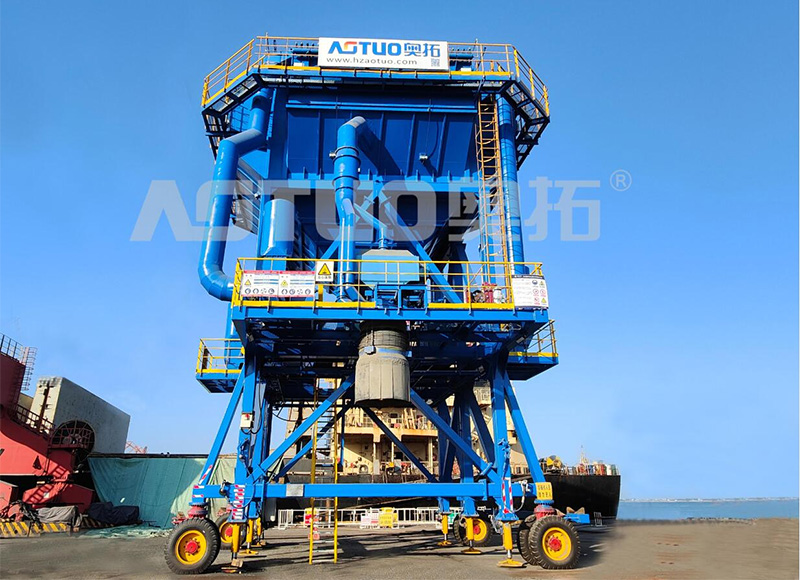
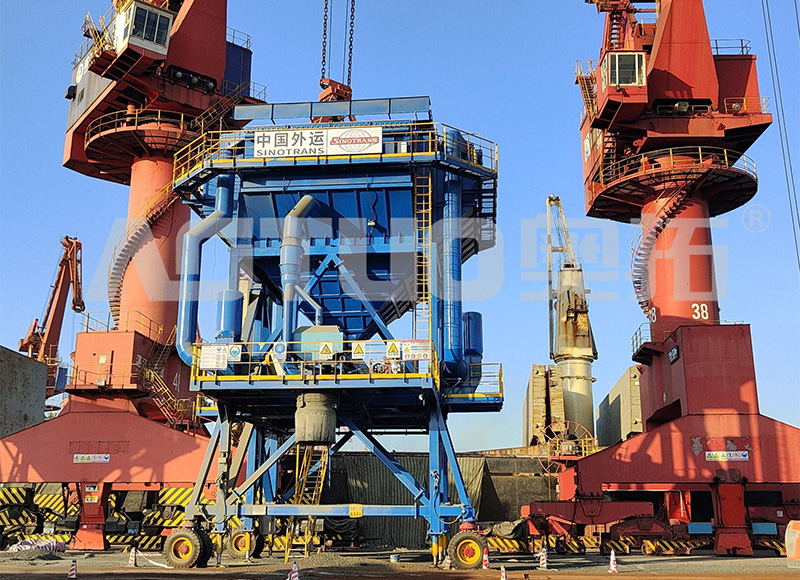
Equipment specifications: 200T/H-800T/H(according to clinker, other materials according to bulk volume weight conversion)
Total installed capacity: 100-250kW
Traction mode: passive traction/automatic traction
Traction travel speed: ≤10m/min
Funnel air volume: ≥60000m³/h (selected according to different material types)
Wheel pressure load: meet the requirements of dock surface load
Working environment wind: ≤6 (no rain)
Typhoon resistance: Level 17 (anchoring + windproof locking)
Hopper loading volume: customized according to grab size
Overall dimensions (L W H): 12.5 x 5.3 x 15.5(for reference only, the actual size is determined according to the volume of the hopper)
| Equipment capacity | 200-800 tons per hour (clinker basis; other materials converted by bulk volume weight) |
| Total installed capacity | 100-250 kilowatts |
| Traction mode | Passive traction or automatic traction |
| Traction travel speed | ≤10 meters per minute |
| Funnel air volume | ≥60,000 cubic meters per hour (selected by material type) |
| Wheel pressure load | Designed to meet dock surface load requirements |
| Working environment wind | ≤6 Beaufort (no rain) |
| Typhoon resistance | Level 17 (with anchoring + windproof locking) |
| Hopper loading volume | Customized according to grab size |
| Overall dimensions (L x W x H) | 12.5 x 5.3 x 15.5 meters (reference; actual determined by hopper volume) |
It is focused on the overall solution of dry bulk material port transfer system,
research and development, manufacturing, and service

Professionalism

Quality

One stop solution



Hangzhou Aotuo Mechanical and Electrical Co., Ltd. (AOTUO) manufactures the 200T/H-800T/H Tire Mobile Dust Suppression Hopper Loader for ports, stockyards and industrial sites that receive clinker and other dry bulk materials from grab unloaders, trucks or conveyors. The unit combines a high-capacity receiving hopper, an integrated dust extraction system and a pneumatic tire chassis so the same machine can be repositioned between berths, stockpiles and bypass operations.
As a China-based manufacturer of dry bulk port transfer equipment, AOTUO supplies this hopper loader as part of a broader range that includes screw ship unloaders, ship loaders, dust collectors and conveying equipment. The design is configured around the grab size, material density, dock surface load and required transfer rate rather than offered as a fixed catalogue item.
The tire mobile dust suppression hopper loader sits between ship unloading and downstream conveying. It receives material discharged by a grab or truck, contains the dust generated at the drop point, and feeds the material into the next stage of the port transfer system. AOTUO positions this model for terminals that need mobility without sacrificing dust control or throughput.
The hopper loader is used where material arrives in batches and must be transferred without releasing dust to the surrounding area. Clinker is the reference material for the capacity rating, but the same chassis and dust system can be configured for coal, cement, limestone, fertilizer, grain and similar dry bulk materials.
| Material | Typical Bulk Density | Capacity Adjustment |
|---|---|---|
| Clinker | 1.4 t/m³ | Reference rating 200–800 t/h |
| Cement | 1.2 t/m³ | Multiply by density ratio |
| Coal | 0.8 t/m³ | Multiply by density ratio |
| Limestone | 1.6 t/m³ | Multiply by density ratio |
Finer materials such as cement or fly ash may require higher dust extraction air volume, typically 80,000–100,000 m³/h, and the system includes variable frequency drive for flow adjustment during operation. For combustible dusts, explosion venting is available.
Every hopper loader is built to the terminal's operating profile. The main configuration choices are:
The hopper loader is delivered as a mobile unit that requires a prepared dock surface, a power connection and anchoring points for typhoon conditions. Hydraulic outriggers stabilize the machine during operation, and the rainproof electrical enclosure is rated IP65. Travel speed is limited to 10 m/min, with a turning radius ≤12 m and gradeability 8% loaded.
Operation is permitted up to Beaufort 6 with no rain. For wind above 6, the boom and hopper must be stowed, and typhoon preparedness includes anchoring at designated points. The windproof locking system is designed for Level 17 typhoon resistance.
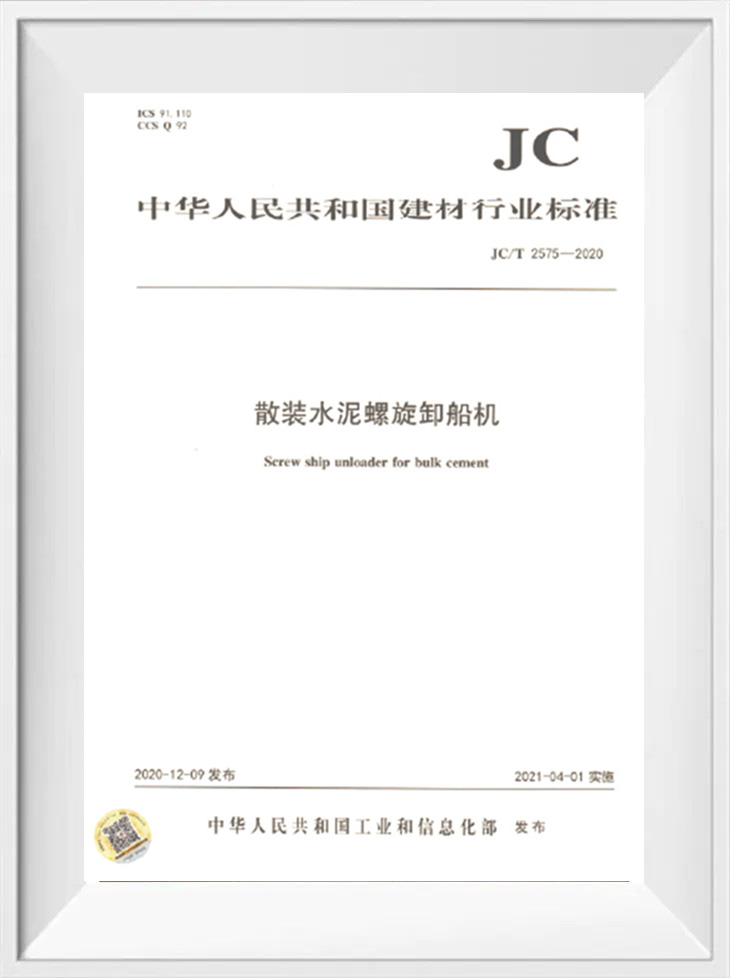
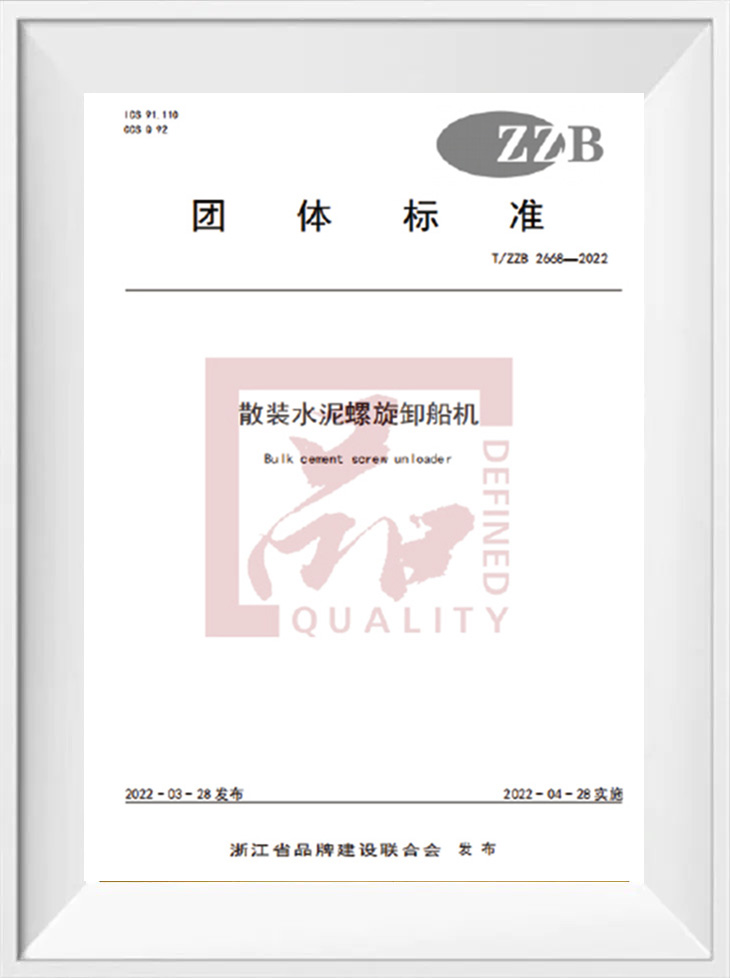
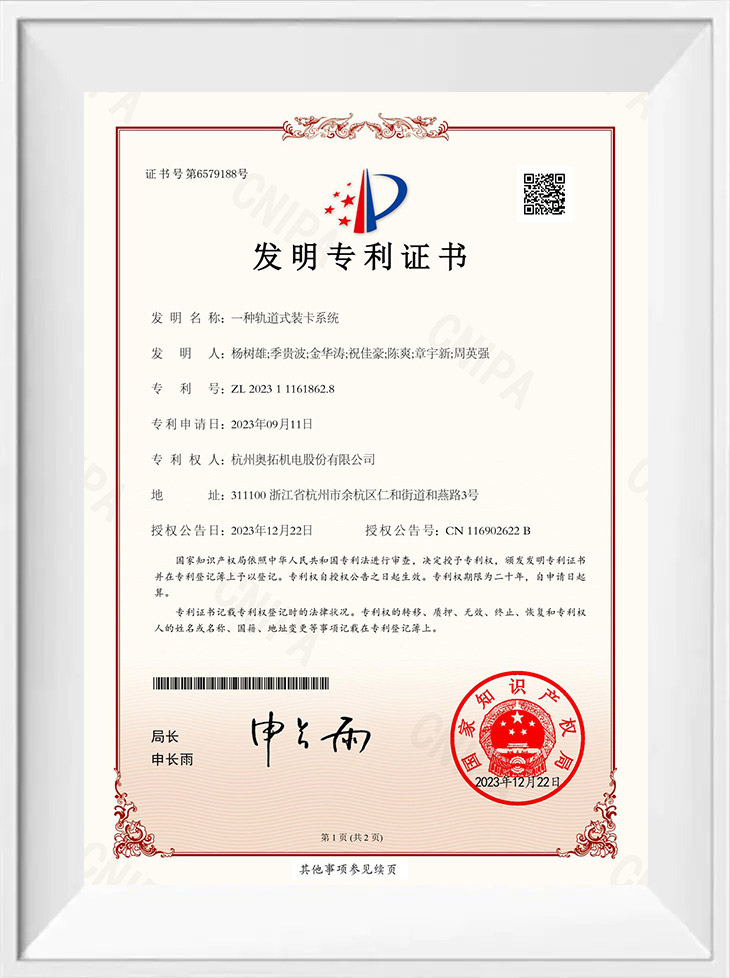
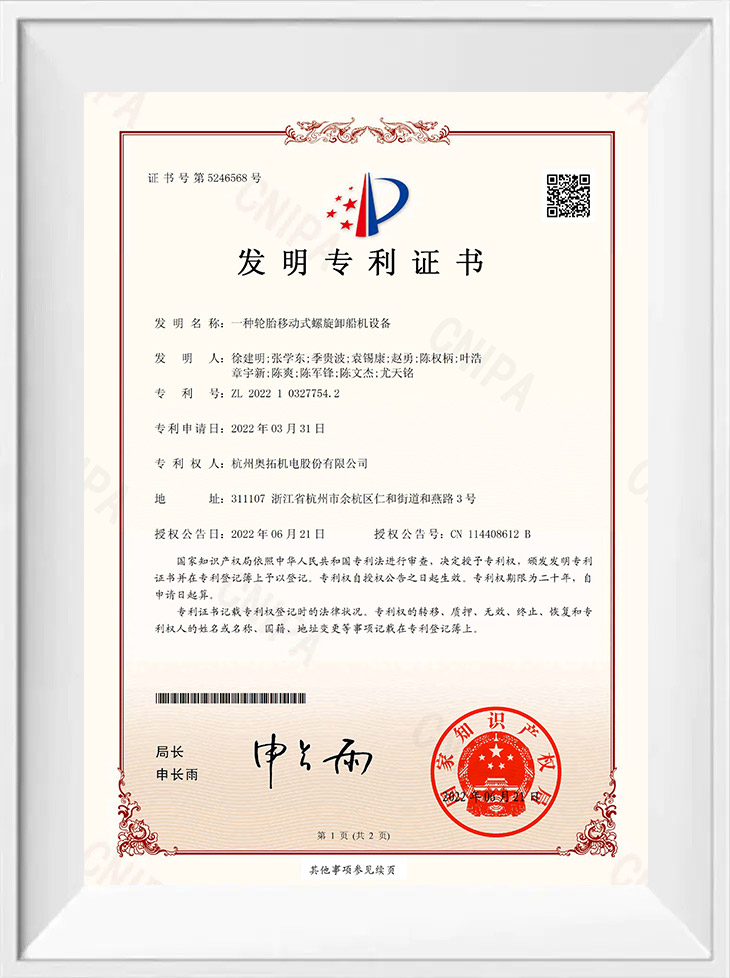
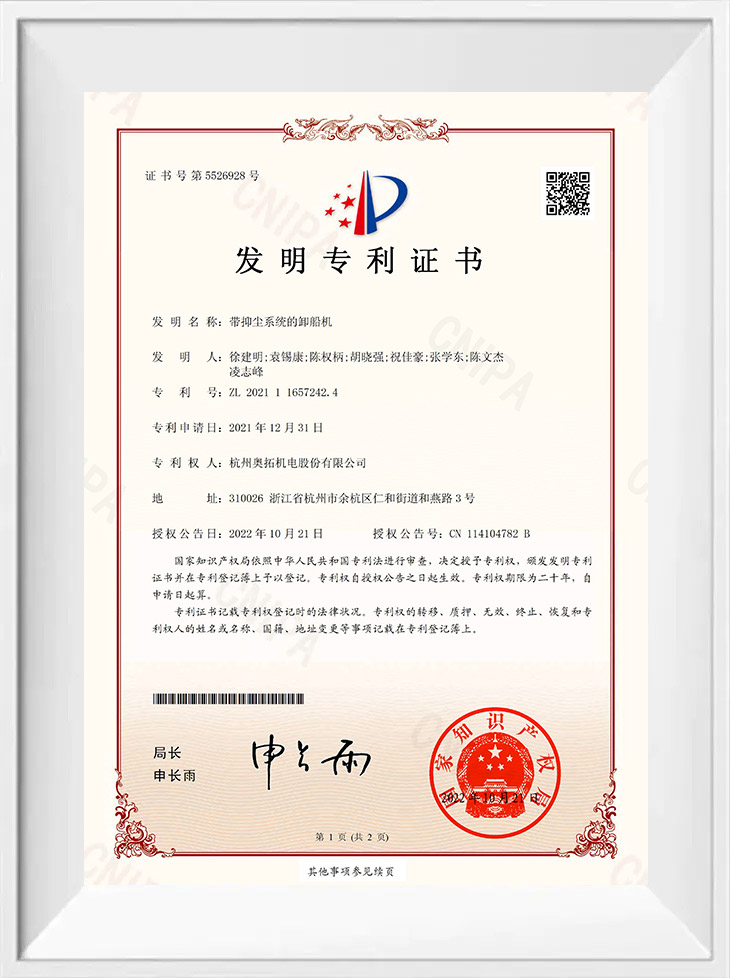
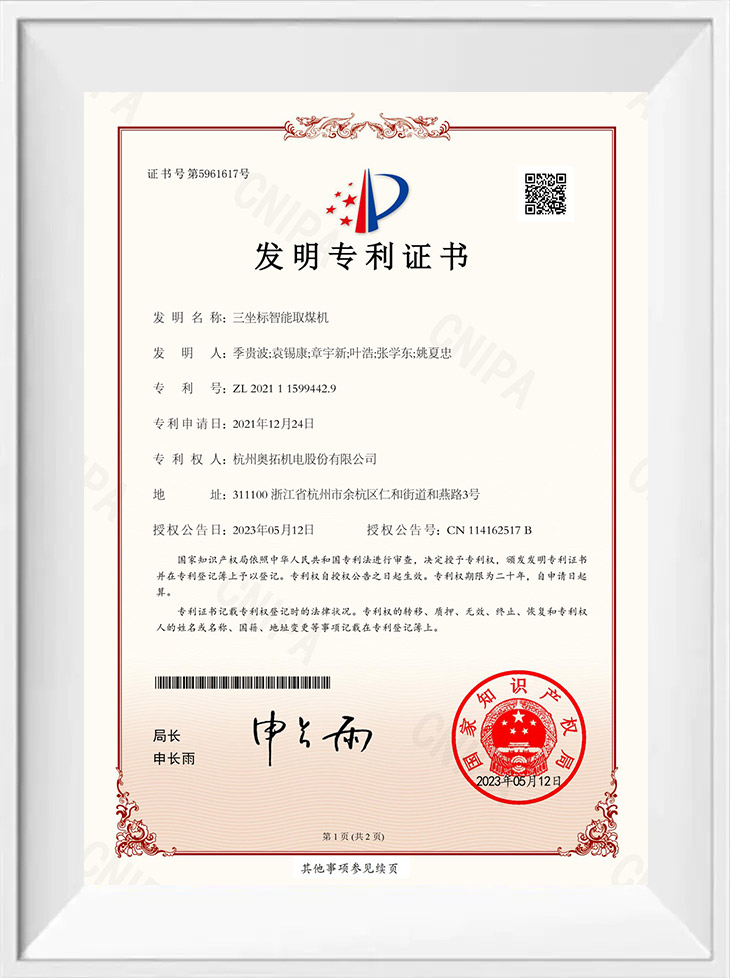
AOTUO is a national high-tech enterprise established in 2003, with over 100 invention, utility, appearance patents and software copyrights. The company is the responsible drafting unit for the industry standard JC/T 2575 "Bulk Cement Spiral Unloader" and operates an A-level production workshop of 14,000 m² with quality, environmental and occupational health and safety management system certificates.
For this product, project support covers configuration review, dust system sizing, traction selection, dock load verification and documentation. Our service team provides installation guidance, commissioning support, operator training and spare parts supply. The integrated predictive maintenance platform includes online fault diagnosis and predictive analysis for long-term reliability.
Routine maintenance is straightforward and can be planned around terminal operations:
Spare parts and technical support are available through AOTUO's service network, which covers domestic and overseas installations.
To prepare a suitable proposal, we need the following project data:
This information allows us to size the hopper, select the dust extraction air volume, specify the traction system and confirm dimensions. For projects that also require ship unloading or loading, our range includes the 1000-70000 DWT 200-1500t/h Tire Mobile Screw Ship Unloader and the 300-1500t/h 800-50000DWT Rail Mobile Ship Loader For Loading Bulk Materials. Auxiliary equipment such as dust collectors and belt conveyors can be integrated into the same transfer system.
How is the dust suppression air volume determined?
The minimum air volume of 60,000 m³/h is selected based on material type and dust generation characteristics. For finer materials such as cement or fly ash, air volume may be increased to 80,000–100,000 m³/h. The system includes variable frequency drive for flow adjustment during operation.
What does typhoon resistance Level 17 entail?
Level 17 corresponds to wind speeds exceeding 56 m/s (202 km/h). The system includes anchoring points at four corners plus windproof locking mechanisms on the boom and hopper. All components are designed for aerodynamic stability with structural reinforcements for extreme wind loads.
What traction options are available?
Passive traction allows towing by a separate vehicle (tractor or forklift). Automatic traction includes onboard diesel-hydraulic or electric drive with joystick control. Travel speed is limited to 10 m/min for safety and stability during repositioning.
How is the hopper volume customized?
Hopper volume is tailored to the grab size used at the terminal. Standard options range from 5 to 15 m³ capacity. The inlet opening, side slope angles, and discharge gate are designed to match specific grab dimensions for optimal material flow and dust containment.
Can the hopper loader be integrated with existing terminal automation?
Yes. The control system can be configured to interface with terminal automation for remote monitoring, scheduling and data collection. AOTUO's integrated predictive maintenance platform supports online fault diagnosis and predictive analysis.
What maintenance is required?
Filter cleaning every 200 hours, fan belt inspection monthly, hydraulic oil change every 2,000 hours, and tire pressure check weekly during operation. Spare parts and service support are available through AOTUO's network.
For a configured proposal, contact AOTUO with your material, capacity and site data. Our engineering team will specify the hopper loader to match your port transfer requirements.
Our portfolio also includes 1000-70000 DWT 200-1500t/h Rail mobile Screw Ship Unloader for applications with different operating ranges, interfaces or integration requirements.
Copyright © Hangzhou Aotuo Mechanical and Electrical Co., Ltd. All Rights Reserved.
Custom 200T/H-800T/H Tire Mobile Dust Suppression Hopper Loader Suppliers



